Advocacy Begins With You: Building Relationships That Strengthen Our Voice for Fish and Fishing
August 12, 2026
Association of Northwest Steelheaders Annual Board Meeting Recap
August 31, 2026
ACTION ALERT:
Protect America’s Roadless Lands
Tell the U.S. Forest Service To Keep the 2001 Roadless Rule
The PNW's salmon and steelhead depend on healthy headwaters located on these lands.
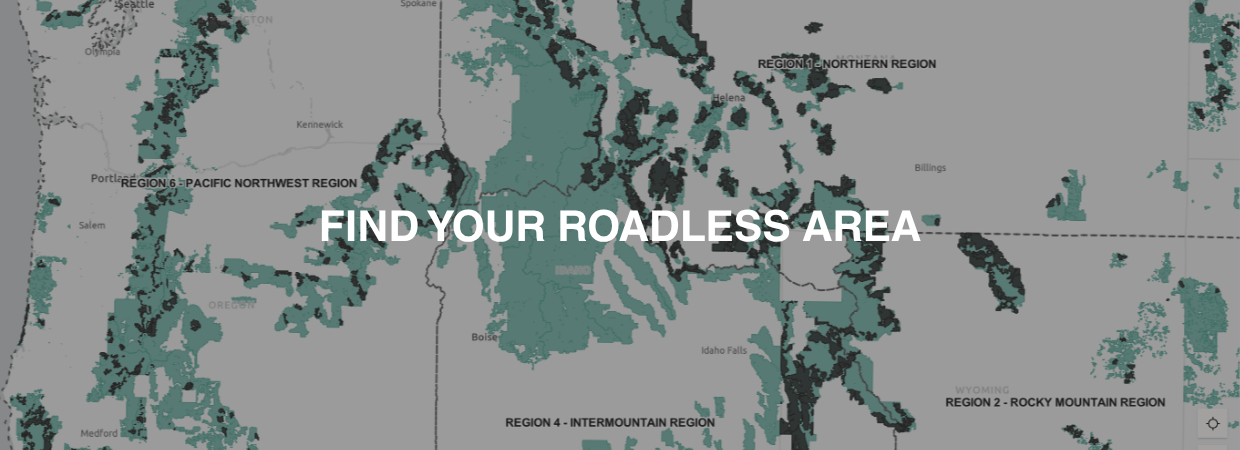
The U.S. Department of Agriculture is proposing to rescind the 2001 Roadless Area Conservation Rule in its entirety, removing national protections for approximately 44.7 million acres of inventoried roadless areas on National Forest System lands.
Our salmon and steelhead are already facing enormous pressures from warming water, habitat degradation, drought, wildfire and other environmental changes. Maintaining intact forest watersheds and clean, cold water is one of the most important things we can do for wild fish. Roadless forests include some of the last, best habitat for wild trout and salmon in the Pacific Northwest.
We should not sacrifice these irreplaceable fisheries strongholds when there are better ways to manage forests, address wildfire risk and improve forest health.
Our wild forests, cold-water streams, and native salmon and steelhead need your voice.
You can easily provide comment by cutting and pasting the customizable template below.
Why anglers should be concerned
The Forest Service's own analysis acknowledges that rescission could create tradeoffs for recreation, including impacts to quiet, remote and self-reliant recreation, while potentially increasing road-based development.
Rescinding the rule would shift decisions about roads, logging, and other activities from a consistent national standard to individual forest management processes. The Forest Service acknowledges that rescission could increase opportunities for new roads, timber harvest, vegetation management, minerals and energy development, where land-management plans allow them.
More roads and development can mean:
- Sediment and runoff reaching streams and spawning habitat
- Fragmentation of important fish and wildlife habitat
- Greater pressure on cold-water refuges that salmon and steelhead increasingly depend upon
- Loss of remote, high-quality fishing opportunities
- Additional long-term road maintenance obligations for an already heavily burdened Forest Service transportation system
What about fighting wildfire?
The USDA argues that rescinding the Roadless Rule would give local managers greater flexibility to address wildfire risk, particularly across roadless areas identified as having high or very high fire risk. However, research cited here finds that most wildfires begin near roads and that the majority are human-caused, while satellite data from four decades shows roadless areas have not burned at significantly higher rates or severity than roaded national forest lands. The Roadless Rule also already allows wildfire suppression, fuel treatments, tree cutting to reduce wildfire risk, and road construction when necessary to address an imminent threat. Together, these findings suggest that eliminating the Roadless Rule may not be necessary to provide managers with the tools they need to address wildfire risk.
Take Action
Submit a public comment opposing the proposed rescission of the 2001 Roadless Area Conservation Rule.
Make sure you customize your letter. Introduce yourself, your background, your favorite fishing areas and your connection to recreational fishing.
The proposal is RIN 0596-AD66 / Docket FS-2025-0001. The current comment deadline is September 21, 2026.
Click the COMMENT NOW button below to go directly to the USDA comment page.
Sample Comment
RE: Comment on Proposed Rescission of the 2001 Roadless Area Conservation Rule — RIN 0596-AD66
Dear U.S. Forest Service,
I am a member of the Association of Northwest Steelheaders, a nonprofit organization representing recreational anglers who care deeply about the health of the Pacific Northwest’s rivers, streams, forests, and fish populations.
I am writing to oppose the proposed rescission of the 2001 Roadless Area Conservation Rule and urge the U.S. Department of Agriculture and Forest Service to retain strong national protections for inventoried roadless areas.
As an angler, I understand that healthy fisheries begin with healthy watersheds. Roadless forests protect some of the most intact watersheds, headwater streams, and cold-water habitats remaining on our public lands. These areas are particularly important to salmon, steelhead, trout, and other native fish that depend on clean, cold water and functioning forest ecosystems.
The proposed rule would remove national protections that generally prohibit new road construction, and timber harvesting in inventoried roadless areas. The Forest Service acknowledges that rescission could increase opportunities for road construction, timber harvest, vegetation management, and other development where existing land-management plans allow it.
I am particularly concerned about the potential consequences for water quality and fish habitat. Roads and associated development can increase sedimentation, alter drainage patterns, fragment habitat, and create additional pressure on sensitive watersheds. For salmon and steelhead already confronting significant environmental challenges, protecting remaining intact habitat should be a priority.
I also do not believe rescinding the Roadless Rule is necessary to provide the Forest Service with the tools needed to address wildfire. The existing rule allows important wildfire-related activities, including fire suppression, fuel treatments, tree cutting to reduce wildfire risk, and road construction when necessary to address imminent threats. The Roadless Rule therefore does not prevent responsible, science-based wildfire management.
At the same time, the Forest Service's own analysis acknowledges that rescinding the rule could create tradeoffs for recreation, including impacts to quiet, remote and self-reliant recreation opportunities. As someone who fishes our national forests, I value these places not simply because they are accessible, but because they provide opportunities to experience relatively intact watersheds and wild fish.
I respectfully urge the Forest Service to withdraw the proposed rule and retain the 2001 Roadless Area Conservation Rule. Our national forests should continue to provide opportunities for responsible recreation and forest management while protecting the clean water, intact habitat, and wild fisheries upon which future generations of anglers will depend.
Thank you for considering my comments.