What the Proposed ODFW 2027–29 Budget Means for Recreational Fishing in Oregon
July 22, 2026
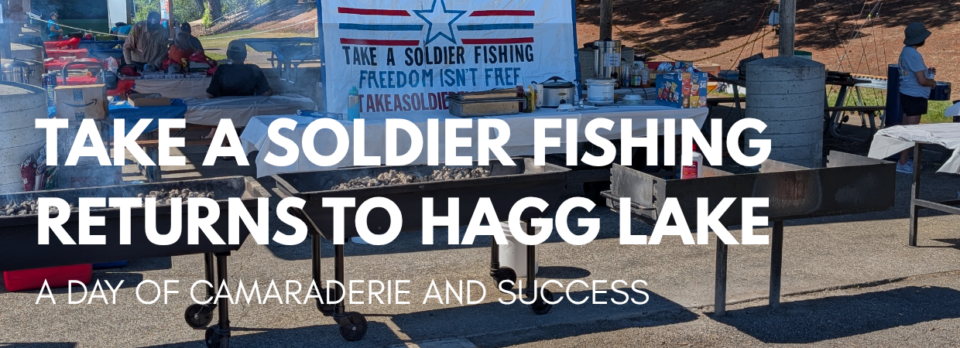
Take A Soldier Fishing Returns to Hagg Lake with a Day of Camaraderie and Success
July 28, 2026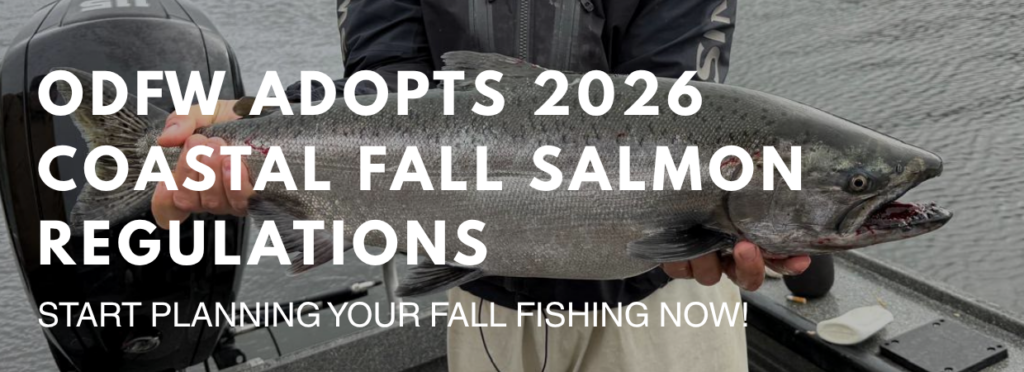

ODFW Adopts 2026 Coastal Fall Salmon Regulations
The Oregon Fish and Wildlife Commission has adopted 2026 fall salmon fishing regulations for Oregon’s coastal rivers, setting the framework for wild Chinook and wild coho fisheries from the Necanicum River south to the Winchuck River. The rules, approved at the Commission’s June 26 meeting in Redmond, largely reflect the staff proposal and will shape fall opportunities for anglers across 18 coastal Chinook basins and 10 coastal coho basins, along with several lake fisheries.
For Northwest Steelheaders members, the overall picture is mixed but still offers meaningful opportunity. Wild Chinook regulations are generally more favorable in several north coast systems, while wild coho seasons remain available in many traditional fisheries despite a lower forecast than last year. At the same time, ODFW continues to take a cautious approach in basins where conservation concerns remain significant.
Wild Fall Chinook: Expanded Opportunity in Several Basins
Wild Chinook retention will be open in 18 coastal basins in 2026, with season dates ranging from July through December depending on the river. Compared to 2025, the biggest news is that ODFW increased wild Chinook bag limits in several key systems, including the Necanicum, Nehalem, Tillamook, Siuslaw, and Umpqua basins.
The Necanicum, Nehalem, and Tillamook basins will all carry a bag limit of 1 wild Chinook per day and 5 per season, a significant increase from last year’s 1 per day and 2 per season. The Siuslaw also moves to 1 per day and 5 per season, up from 1 per day and 2 per season in 2025.
One of the most notable changes is in the Umpqua Basin, where anglers will be allowed 1 wild Chinook per day and 5 per season, up from just 1 fish for the entire season last year. ODFW also removed the Umpqua harvest quota that had constrained opportunity in previous years.
Not every basin saw expanded opportunity. The Nestucca Basin will move in the opposite direction, dropping from 1 wild Chinook per day and 5 per season to 1 per day and 2 per season in 2026. Elsewhere, many systems remain unchanged, including the Salmon, Siletz, Yaquina, Alsea, Coos, Floras/New, Sixes, Hunter, Pistol, Chetco, and Winchuck basins.
A few basin-specific restrictions remain important to note. The Coquille River and Elk River will be closed to wild Chinook retention in 2026 because of conservation concerns, though both will still provide hatchery Chinook opportunity during limited seasons. The Coos Basin remains somewhat unique, with a daily adult salmon bag limit of three fish, no more than two of which may be wild.
Wild Coho: Similar Structure, But a Tighter Outlook
Wild coho regulations for 2026 are more restrained, reflecting a lower forecast for Oregon Coast Natural (OCN) coho. ODFW’s preseason forecast estimates 218,600 OCN coho this year, down from 289,000 forecast in 2025. As a result, the Commission adopted seasons that are similar to last year in many places but scaled back in others.
Wild coho retention will be open in 10 coastal river basins, plus the lake fisheries at Siltcoos, Tahkenitch, and Tenmile. In the river systems, the bag limit remains 1 fish per day and 3 per season. In the lake fisheries, the bag limit remains 1 per day and 5 per season.
The Nehalem, Tillamook, and Nestucca fisheries will again run on a Wednesday, Saturday, and Sunday schedule from September 9 through October 28, with one extra open day compared to last year. The Coos Basin will also gain a bit of opportunity, increasing from 28 to 30 open days.
Several fisheries, however, are shorter than in 2025. The Siletz season drops from 65 open days to 50, while the Siuslaw declines from 32 days to 25. The Coquille will also be slightly shorter. The most significant change is in the Alsea Basin, which will be closed to wild coho retention in 2026 after having a 53-day season last year. The Umpqua Basin will also remain closed for wild coho.
ODFW noted that the Alsea and Umpqua did not meet the criteria needed to open a wild coho fishery because projected returns are below “full seeding” levels established under federal salmon management standards. “Seeding” refers to the number of adult spawners needed to fully utilize available freshwater habitat.
That said, there may still be movement on the Alsea. During the June 26 meeting, Commissioners directed staff to ask the National Marine Fisheries Service (NMFS) to approve an Alsea wild coho fishery that would remain below the allowable exploitation limit, ideally with at least a 30-day season and a 1-fish-per-day, 3-fish-per-season bag limit.
Why the Caution?
Management of coastal wild Chinook fisheries is guided by two major conservation frameworks: the Coastal Multi-Species Conservation and Management Plan (CMP) for rivers from the Elk north, and the Rogue Fall Chinook Conservation Plan (RFCCP) for rivers south of the Elk. These plans use abundance-based thresholds to determine whether fisheries can open, and what bag limits or restrictions should apply.
In recent years, ODFW has increasingly emphasized the uncertainty facing salmon managers. Rapid climate and ocean change, inconsistent run performance among neighboring rivers, and highly variable spawning returns have all made preseason forecasting more difficult. Since the CMP was adopted, 11 of 14 monitored Chinook populations have fallen to or below critical thresholds in at least one year. ODFW has also pointed to signs that freshwater harvest rates may be increasing in some systems even as ocean harvest rates decline.
Taken together, those trends help explain why ODFW has continued to use more conservative regulations than the original plans might have called for.
Additional Monitoring on the Trask
In related news, ODFW’s coastal Chinook monitoring program expects to launch a mark-recapture study on the Trask River this year to improve estimates of fall Chinook spawning escapement. The work will be similar to the Wilson River effort conducted a few years ago, though this time ODFW plans to use a dedicated crew for capture, marking, and spawning ground surveys.
To prepare for that work, the monitoring team expects to conduct some spring Chinook capture operations on the Trask in June to identify effective tagging locations and refine field methods. Any fish captured will be tagged and released, and anglers are encouraged to report tagged fish if encountered.
For coastal anglers, the 2026 regulations offer some welcome Chinook opportunity—especially in the north coast and Umpqua systems—while also underscoring the continued need for cautious, science-based management. As always, members should check ODFW’s in-season regulation updates before fishing, as emergency changes or additional approvals can still affect final opportunity on the water.
An Important Access Update for Nestucca Anglers
Anglers fishing the Nestucca River will soon notice a change at the Cloverdale Boat Ramp. To address ongoing after-hours misuse of the property and concerns raised by the Cloverdale Sanitary District, the Oregon Department of Fish and Wildlife (ODFW) is installing an automated gate at the entrance to the facility.
The gate will open automatically each morning and close each evening. Anglers who are inside the gate at closing time will still be able to exit the site. The system is expected to become operational later this week.
While this change may require some adjustment, it is intended to help preserve public access to the boat ramp, which is located primarily on property owned by the Cloverdale Sanitary District. Gate operating hours have been established to accommodate normal fishing access while reducing nighttime activity that has impacted the site.
ODFW will post contact information at the gate should users experience any operational issues.