Fishing, Learning, Belonging: Family Fish Camp 2026
May 14, 2026
The End of Fishing in Oregon: an Update on IP 28
May 30, 2026

Catch More Shad, Catch More Salmon
For many Northwest anglers, shad are more than just a fun seasonal fishery — they are also one of the most effective and affordable natural baits available for salmon, halibut, crab, and sturgeon fishing.
Why Shad Makes Excellent Bait
For years, I primarily froze shad for crab and sturgeon bait. Shad freezes exceptionally well, and its oily flesh produces a strong scent trail that attracts a variety of species. Whole fish can simply be wrapped individually and stacked in the freezer without vacuum sealing.
Eventually, I heard stories from veteran coastal anglers who were successfully using strips of shad behind hoochies for ocean coho salmon.
Many years ago, I asked Dale Reiber and John Ward how to go about catching herring. Dale and John were both members of the South Coast Chapter of NW Steelheaders, and instrumental in Coos County S.T.E.P. and the Morgan Creek fish hatchery. They explained “We don’t bother with herring. It gets too soft when you catch and freeze your own. Besides we have good luck with shad.” They simply used a chunk of shad the same way people use a plug cut or chunk of herring behind a hoochy. That’s all there is to it.
At first, I was skeptical. Herring had always been the standard salmon bait, and it was hard to imagine shad outperforming it. But the appeal of plentiful, inexpensive bait was too strong to ignore.
What Are Shad?
American shad are a non-native species introduced to West Coast rivers more than a century ago. Like salmon, they are anadromous fish, meaning they hatch in freshwater, migrate to the ocean, and return to rivers to spawn. Unlike salmon, however, shad thrive in warmer water conditions and have flourished throughout the Columbia Basin and many Pacific Northwest rivers.
In recent years, shad returns at Bonneville Dam have numbered in the millions, far exceeding salmon counts. While researchers continue to study the ecological impacts of shad on native fish populations, anglers are encouraged to retain harvested shad and make good use of them as table fare or bait.
Today, shad can be found throughout the Columbia, Willamette, Umpqua, Siuslaw, Lake Washington, Cedar River and other Northwest rivers. Their spawning runs typically occur from May through mid-July.
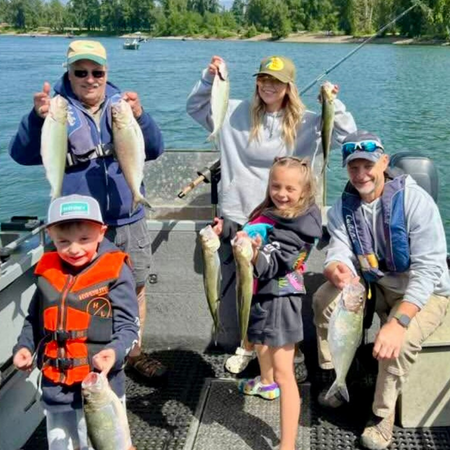
Fishing for Shad
Shad fishing is fast-paced, accessible, and a great opportunity to introduce kids and new anglers to fishing. These fish are aggressive biters and are commonly caught using small, brightly colored jigs, darts, or flies fished in strong current.
Many anglers prefer light-action kokanee or trout rods that allow shad to put up an energetic fight while keeping hooks pinned securely without pulling out of their soft mouths. Shad can be fished for from the bank or a boat, with large schools often moving through predictable holding water, making for high-action days on the river.
Our friends at ODFW have provided a detailed video on how to fish for shad and where to find them.
Shad as Table Fare
Although shad are often overlooked as an eating fish because of their extensive bone structure, they can be excellent when properly prepared. Smoked and canned shad are especially popular, and shad roe has long been considered a delicacy.
Bleeding and icing fish immediately after harvest greatly improves quality. Anglers willing to put in the preparation time are often pleasantly surprised by the results.
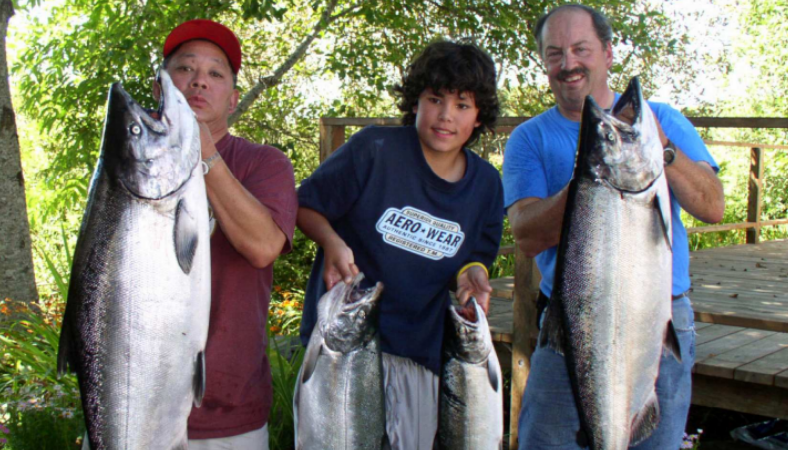
The Results on the Water
The first ocean trip using shad quickly changed my opinion.
We rigged half our rods with traditional herring and the other half with shad strips. The difference became obvious almost immediately. Shad consistently outfished herring, often by a two-to-one margin. By the end of the day, nobody on the boat wanted to switch back.
That pattern continued throughout the season. Anglers who started the morning skeptical about shad were usually convinced before the day was over.
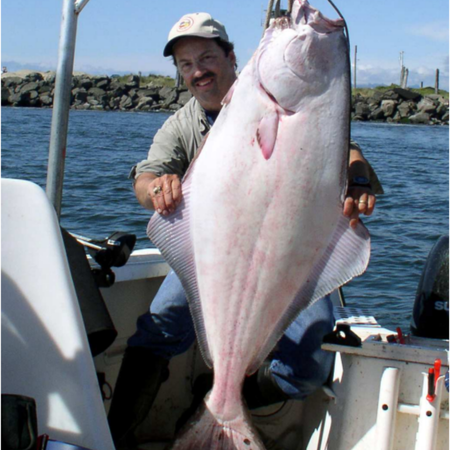
The bait also proved highly effective for halibut. On one all-depth halibut trip, shad accounted for our entire catch, including the largest halibut ever landed on my boat at over 70 pounds.
One of the greatest advantages of shad is durability. Properly rigged strips stay on the hook exceptionally well, even after multiple strikes or extended trolling. A single large shad can provide the equivalent of several dozen herring baits.
By the end of one particularly productive ocean coho season south of Cape Falcon, our boat had recorded 31 angler-days across 14 trips and landed more than 150 salmon and steelhead. Nearly all were caught using shad.
How to Prepare Shad as Salmon Bait
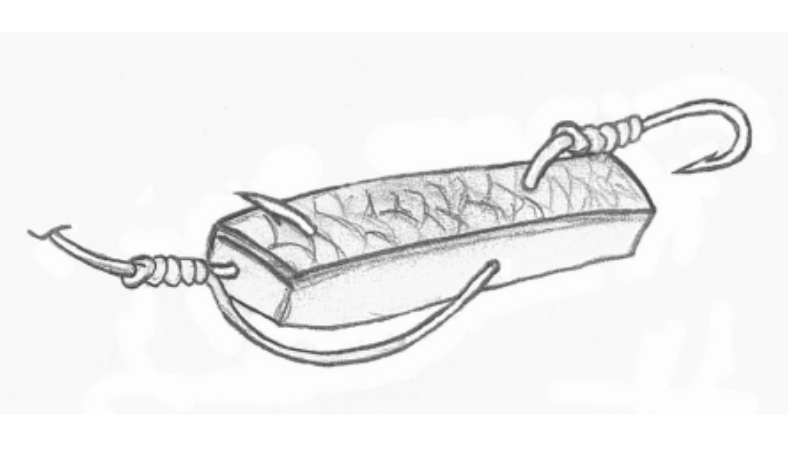
Start by filleting the sides off the back bone, cutting through the ribs. Put the head and spine aside for crab bait. Cut the fillet into about 2 ½ inch lengths. Cut these lengths into strips about ¾ inch to 1 inch wide. This should provide you with about a dozen baits that have a skin side dimension of roughly 2 ½ inch by ¾ inch. The skin is very important. It is as tough as leather. While the meat is relatively delicate and will not hold a hook, it does stay attached to the skin.
Insert the top hook of your two hook mooching leader into one end of the bait from the meat side and through the skin. I like to pass the trailing hook through the center and allow it to dangle just beyond the end of the bait. Others just let the trailing hook dangle from the top hook.
A Fun and Ample Fishery
Shad runs provide anglers with a unique opportunity: a fun, family-friendly fishery that also produces premium bait for some of the Northwest’s most sought-after species.
If you have never targeted shad before, this summer may be the perfect time to give it a try. You might come home with more than just a memorable day on the river — you may also discover your new favorite salmon bait.

Norm Richie has been a passionate angler for more than 60 years, a conservation advocate for over 45 years, and a member of the board of directors for the Association of Northwest Steelheaders for more than two decades. This article was originally written in 2015 and recently updated to encourage more anglers to experience the excitement and value of shad fishing in the Pacific Northwest.